


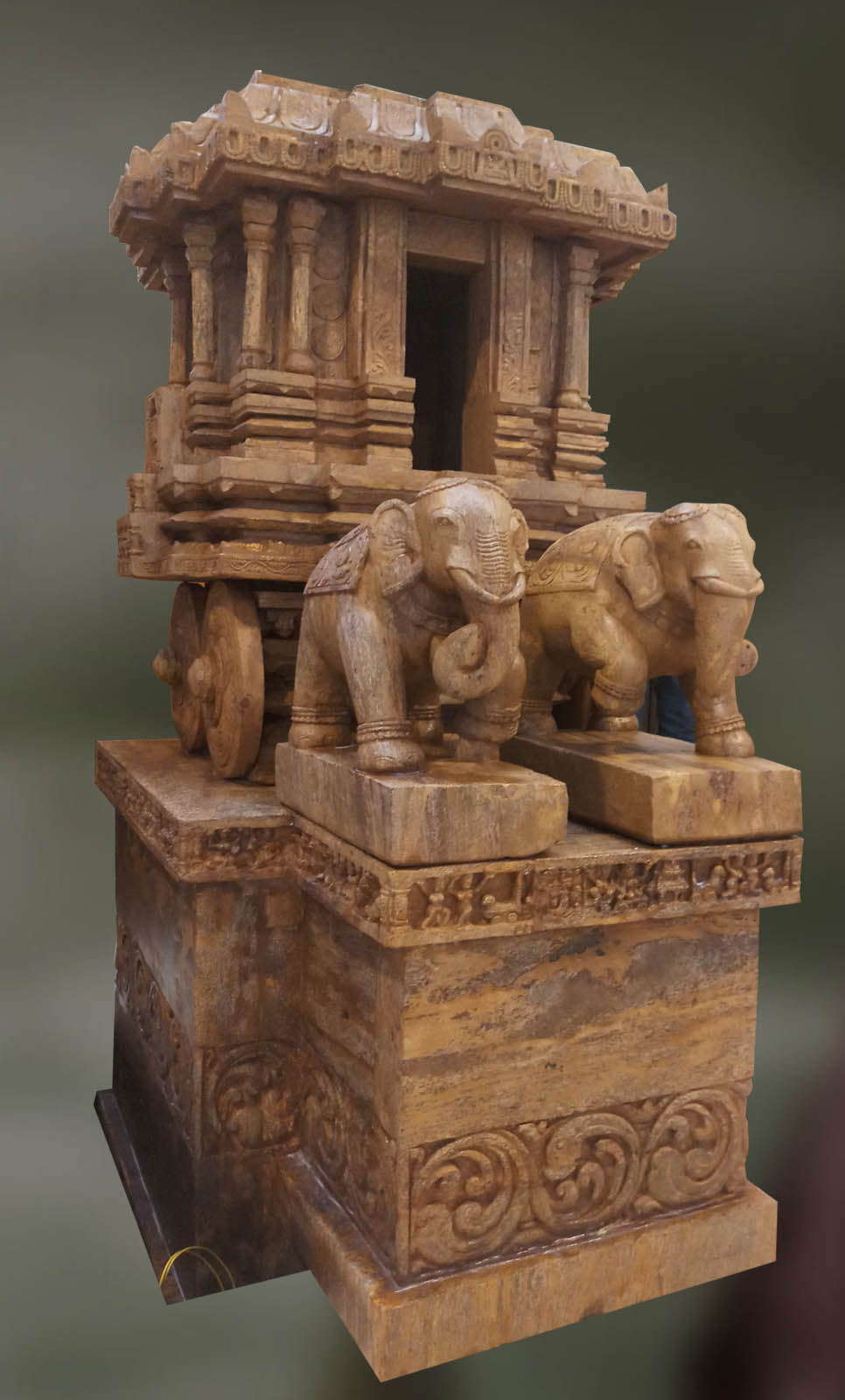
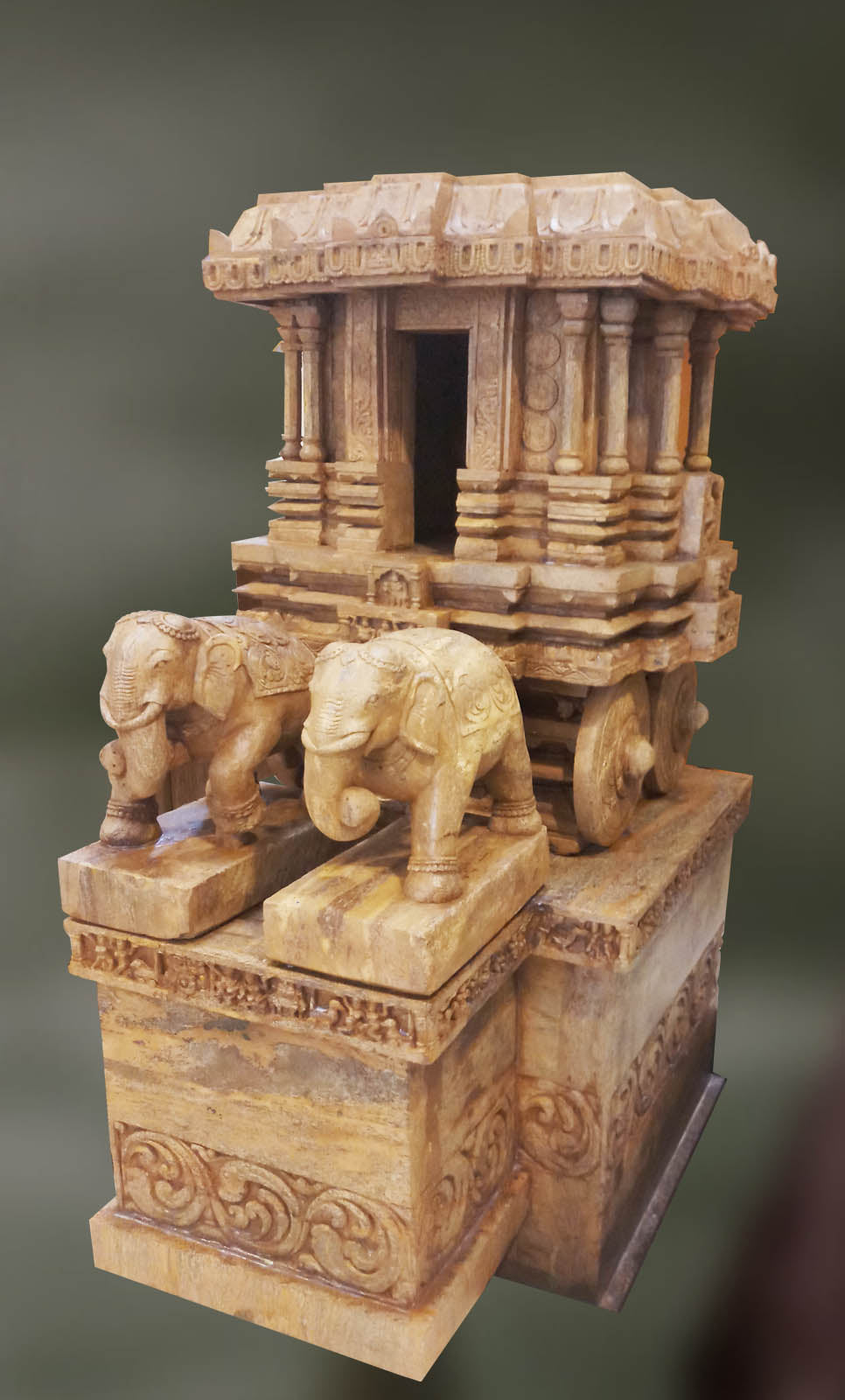
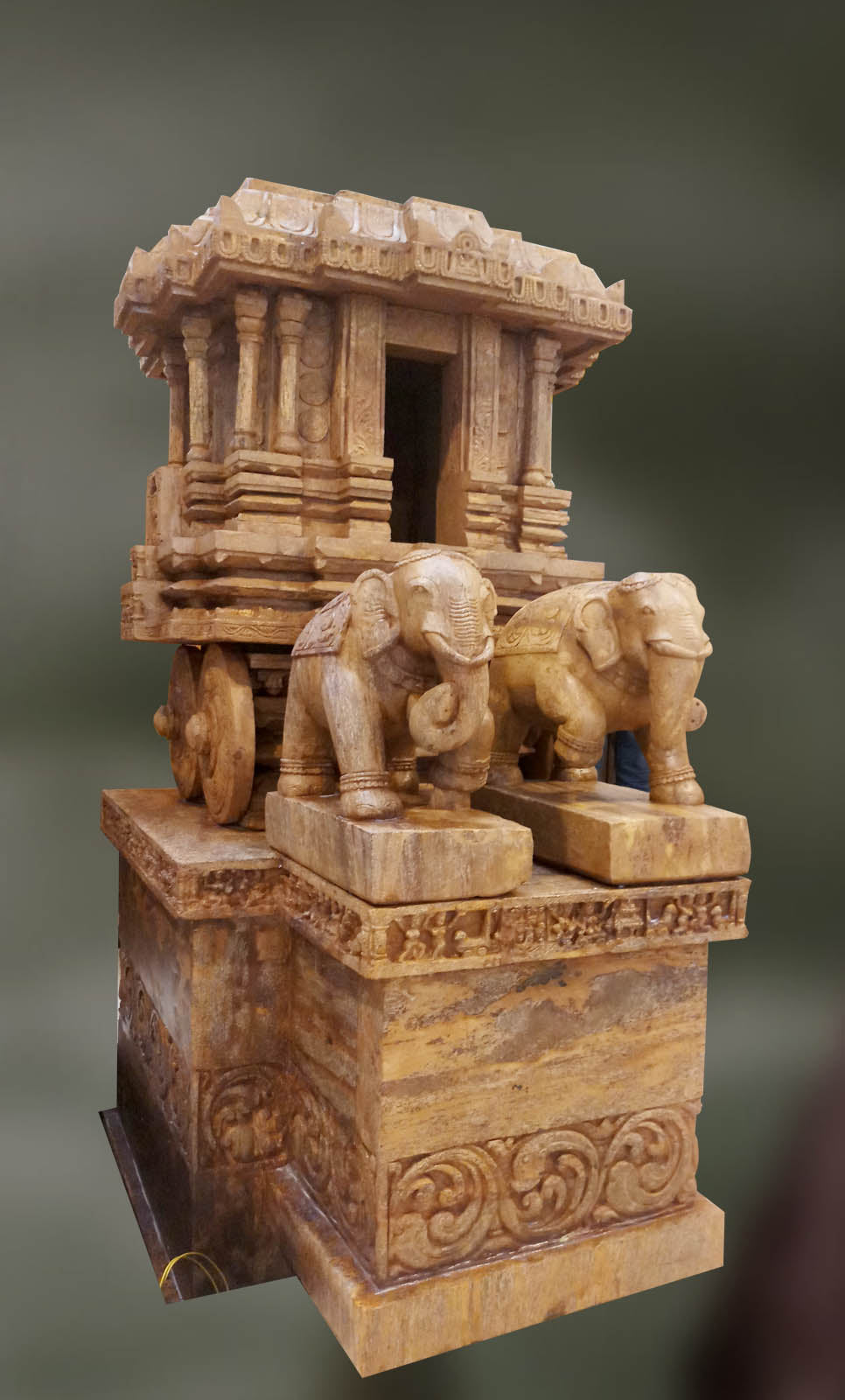
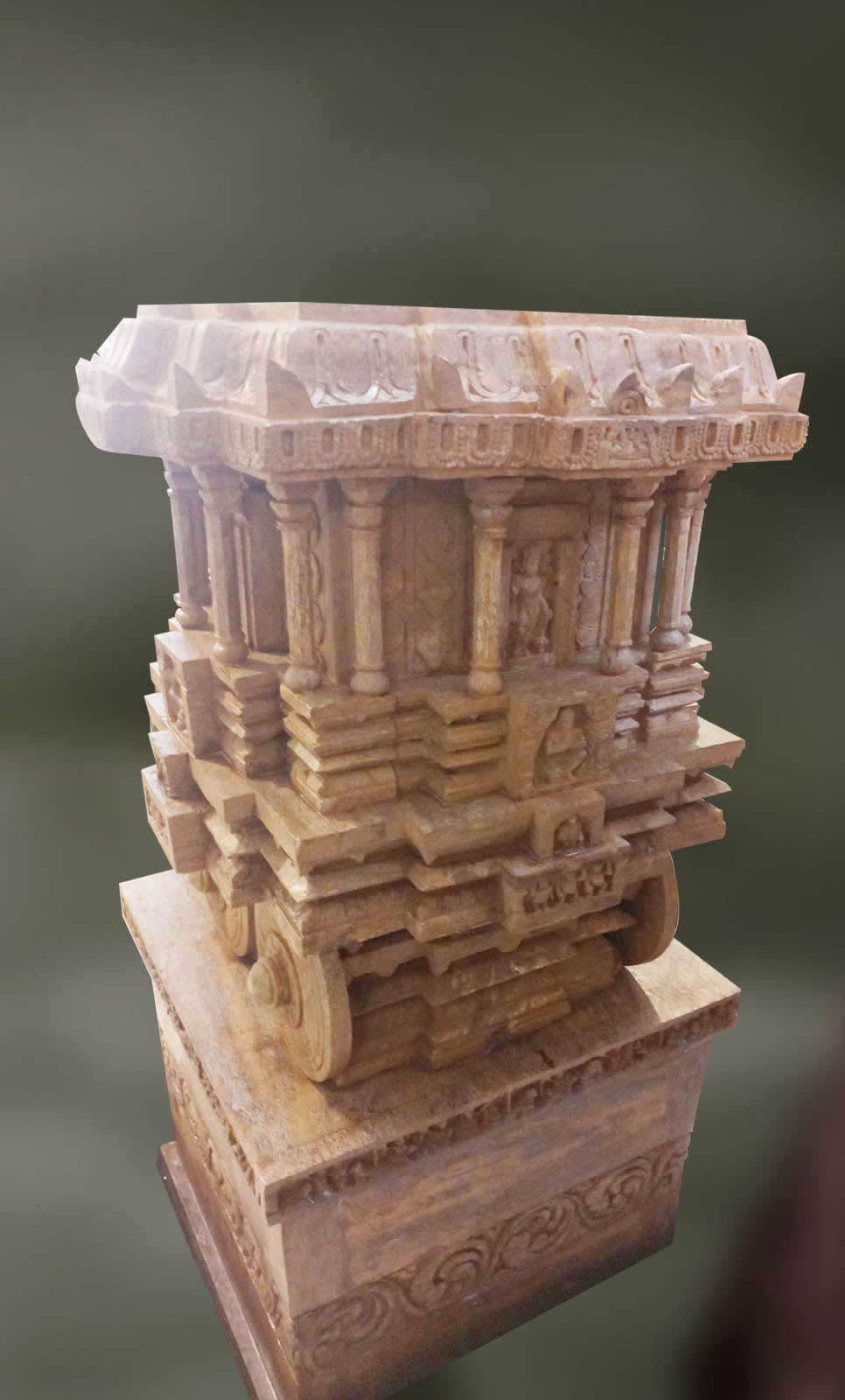
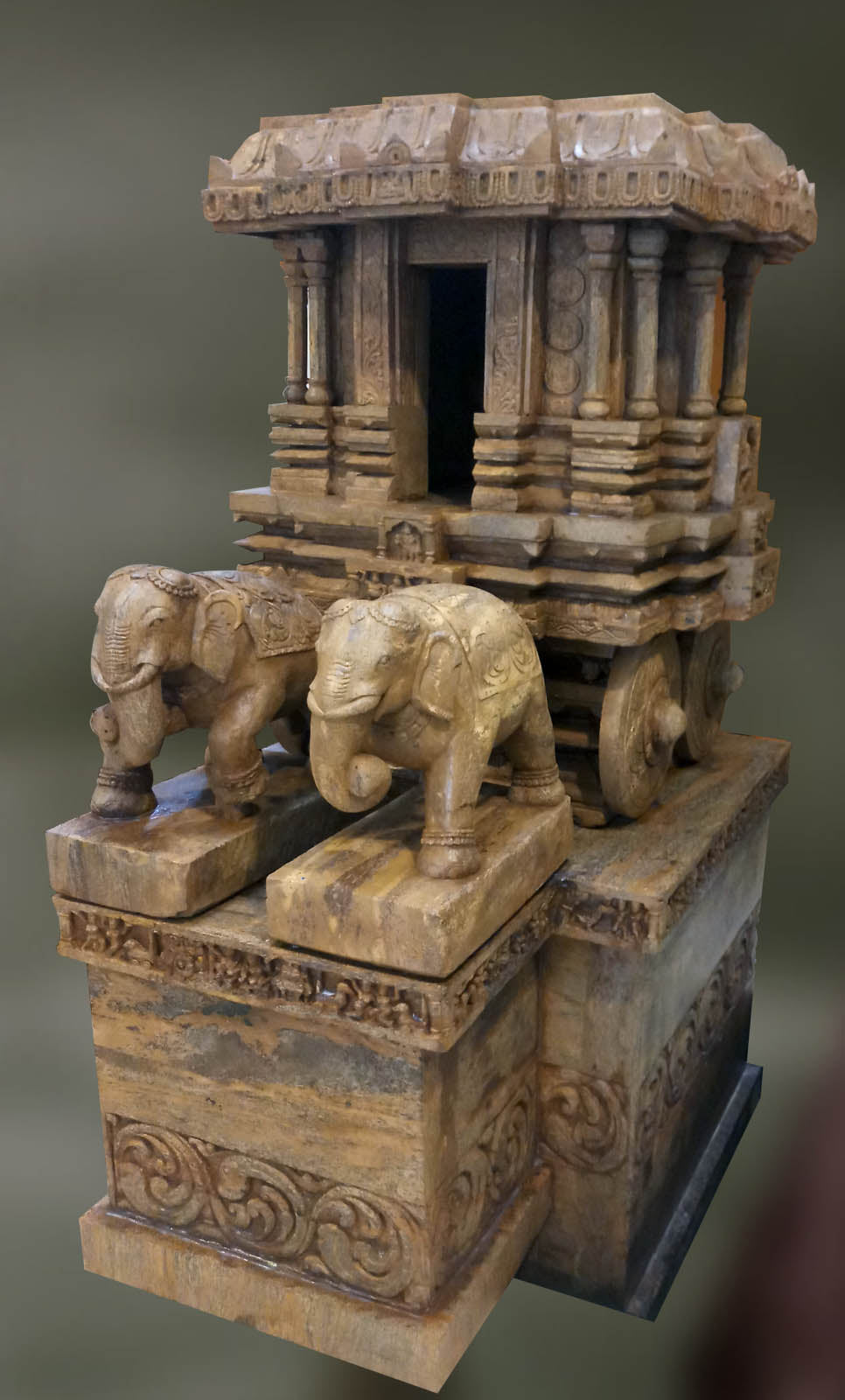
Hampi Chariot: Recreate And Own an Ancient Indian Marvel
$3,807
This Hampi Stone Chariot is inspired by the iconic temple chariot at the Vittala Temple in Hampi, a 16th-century monument of the Vijayanagara Empire. The Hampi Chariot is in itself a recreation of another Indian masterpiece- the chariot at the Konark temple in Odisha. King Krishnadevaraya commissioned this project as a way to display the precision and grandeur of his Vijayanagara empire. Today, Hampi's many monuments make it a world heritage site, and the chariot is its standout feature. Customize this to a size you need and place it in your masterplan to bring in the erstwhile glory of our land.
What This Sculpture Represents In A Home
Unlike a deity idol meant for ritual worship, the chariot is a sacred architectural symbol.
It functions as a spiritual focal point - grounding the space culturally rather than religiously.
Ideal For
• Entrance foyers of villas & large apartments
• Cultural or heritage themed interiors
• Resorts, retreat centres & hospitality spaces
• Meditation halls and courtyards
• NRI homes wanting an India anchor element
Placement Guidance
• Best placed where it becomes a visual destination — not a shelf object
• Slightly offset from direct door axis (not blocking movement)
• Can face the entrance or open interior space
• Outdoor semi-covered placement also suitable
Related Items

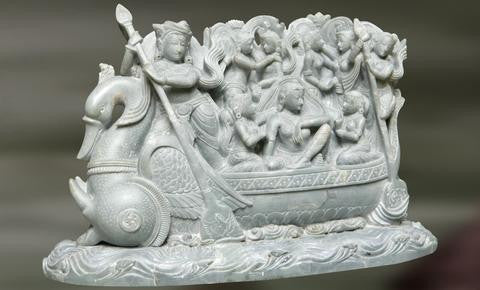
Nabakeli: Boat Ride by Maidens
$1,250
The Indian maritime history dates back to 3000 BCE. The well developed and robust system had a far and wide reach. From Rome, Greece to Mesopotamian, Persia and Arabia, traders made their presence felt all over. Spices were the most in demand export items to the western world.
This Green-Stone sculpture captures a boat ride by maidens. The expression captures the confidence and the skills of the maidens at riding the boat in the high sea. It also showcases how women in ancient India were in centre of all major activities.
Suggested Placement: In the living room or in the bed room.
Note: With respect to size, the statue can be custom made i.e. hand sculpted over a specific time frame.

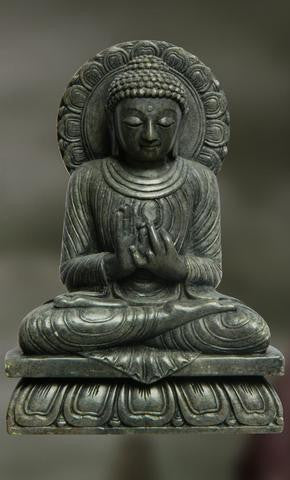
Dharma: The First Sermon
$120
Each Mudras or peculiar hand gestures that can be seen in statues of Buddha have their own meaning, providing insights into an enlightened life. Dharmachakra mudra is one such unique hand gesture as sculpted in this kochila-stone marvel with bit of black polish. Translated from Buddhism as the wheel of Dharma, the distinctive gesture is also known as gesture of Teaching of the Wheel of Dharma. It depicts a significant moment in Buddha's life; he performed the mudra during his first sermon in Sarnath, a city north-east of Varanasi near the confluence of the Ganges and the Gomati rivers in Uttar Pradesh, India. Looking at the sculpture can unconsciously elevate inner awareness and usher calmness and peace.
Suggested Placement : The prayer room or the living room.
Note : With respect to size, the statue can be custom made i.e. hand sculpted over a specific time frame.

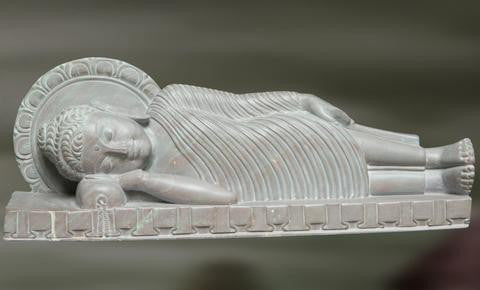
Moksha: The Transcendent Buddha
$180
This sculpture is one among the many which reflect the influence of Buddhism, which has been carried forward through generations. The central theme of this sculpture emanates peace of mind. The Nirvana state of Buddha comes alive from its redstone form, and recreates a sense of completeness that is embellished with nothing, but freedom (Moksha in Sanskrit) that comes with calmness.
Suggested Placement : In The living room.
Note : With respect to size, the statue can be custom made -- hand sculpted over a specific time frame.